
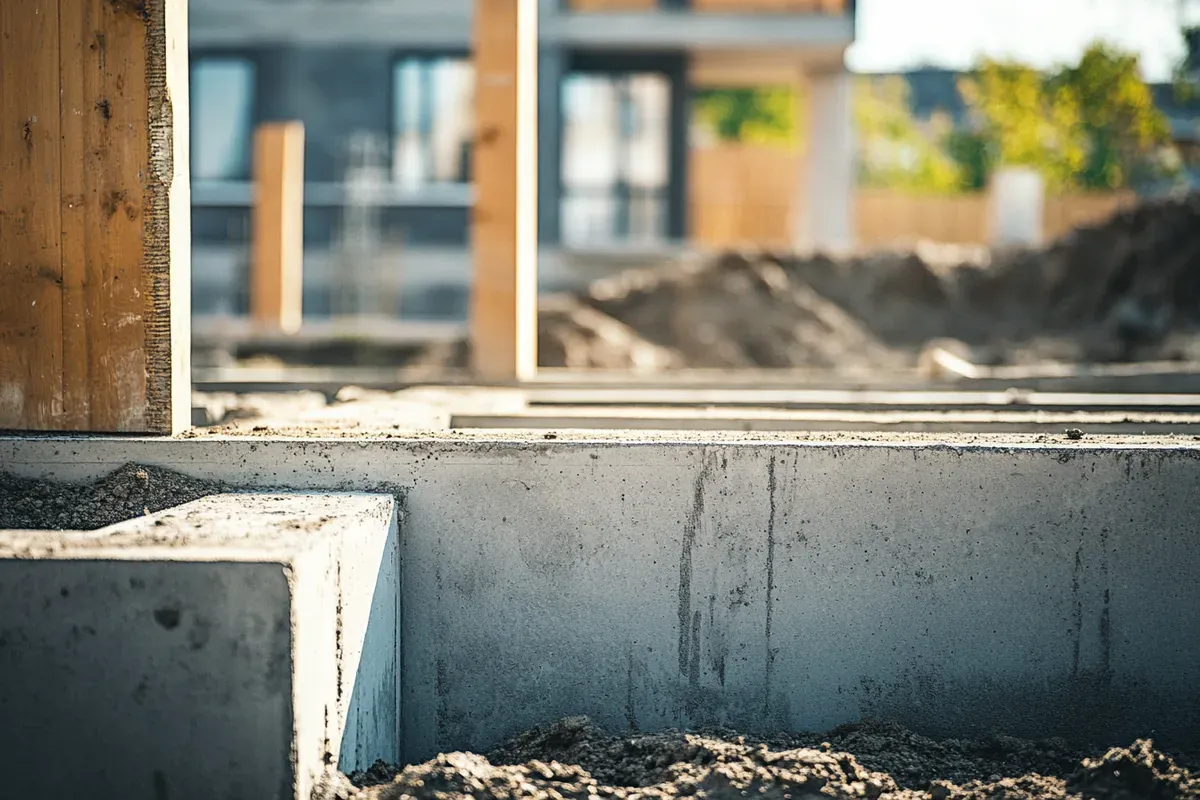
What the soil maps show under The Colony and its neighbors
Expansive clay soil is no rumor around here. USDA-NRCS soil data at 630 random points, 30 inside each of the 21 towns we work in, keeps turning up the same few clays: Houston Black at 16% of points, Branyon at 10%, Wilson at 9%, Ferris at 8%, then Birome and Heiden. Water covered 7% of the points.
The figure to watch is linear extensibility, which is the percent a soil swells and shrinks. NRCS sorts it as low under 3, moderate from 3 to 6, high from 6 to 9, and very high at 9 or more. Of our 630 points, 42% tested very high and another 8% high. Houston Black map units carried values of 12 or 17, Branyon 9.9, and Ferris 17. NRCS also publishes a Texas rating called Dwellings on Concrete Slab. It scored 51% of the points very limited and 40% somewhat limited, and only 1% came back not limited.
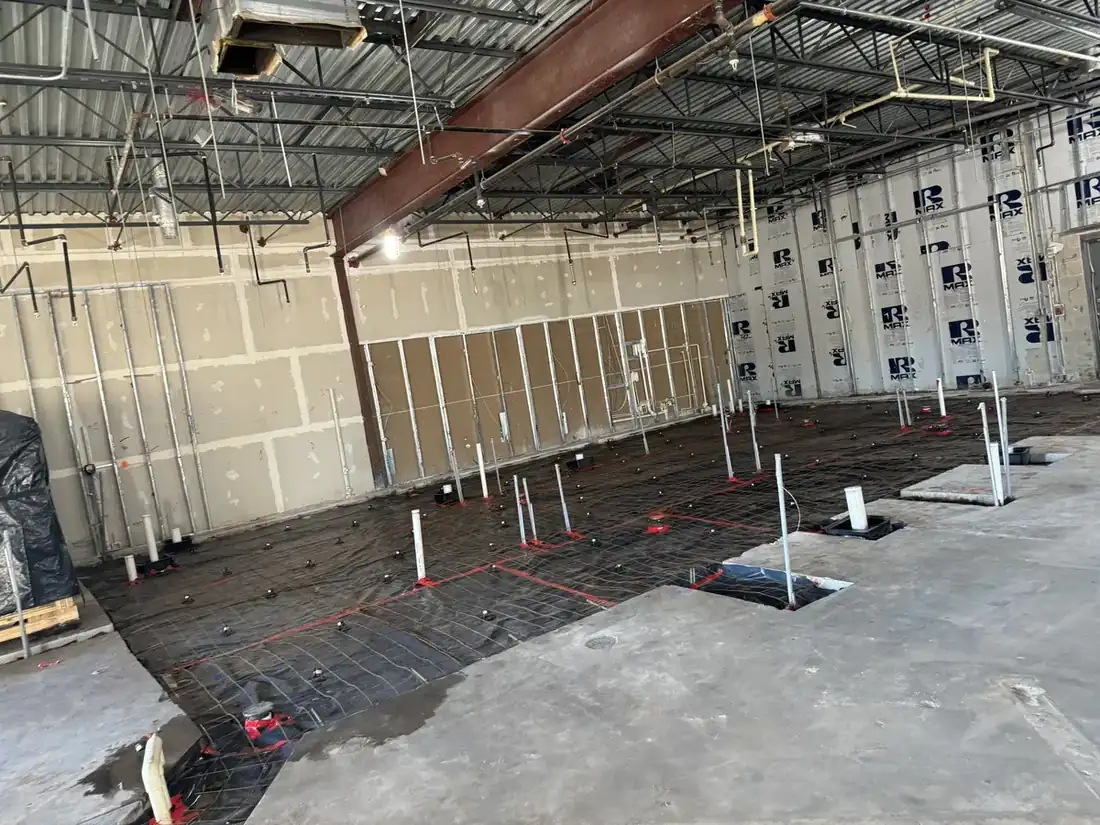
How Blackland ground cracks, swells and moves a pour
The USDA's own write-up of Houston Black clay reads like a warning label. The series is very deep and very slowly permeable. When it dries, it cracks 0.5 to 4 inches wide and 12 inches or more deep, and the cracks stay open 90 to 150 days in most years. Branyon clay, a stream-terrace soil, covers just over half of The Colony's sample points, and it opens cracks 1 to 3 inches wide that reach 20 inches or more. Heiden near the lake opens 0.5 to 3 inch cracks.
Now picture a patio sitting on top. A long August dry spell lets the ground pull away from the pad, and the edges lose their support. When fall rain arrives, it runs down the open cracks and the ground swells back. The Dallas County Master Gardeners name droughts, floods, routine weather swings and poor drainage as causes of slab movement, and they add tree roots under a house to the list.
Weather here pushes both ways. DFW Airport averages 37.01 inches of rain a year. May (4.78 inches) and October (4.37 inches) are the wettest months, while July and August are the driest at about 2 inches each. The same station records about 106 days a year at 90 degrees or hotter. A wet spring, a baked summer and a wet fall can put expansive clay soil through a full shrink and swell cycle in one year.
What It Costs
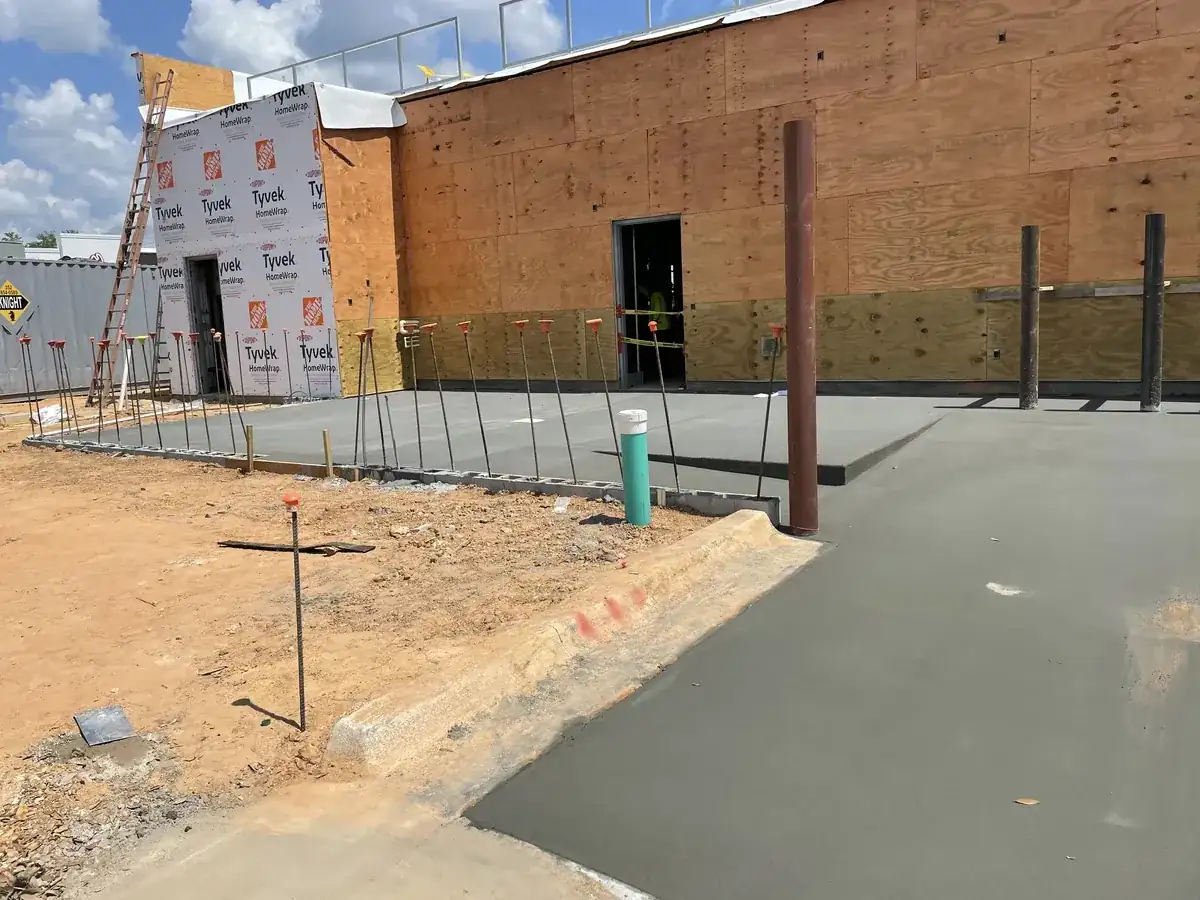
These are our ranges for reinforced work on north DFW clay, base prep included. Expansive clay soil shows up in the price through base depth, steel and thickness, not as a separate fee. Every job starts with a free estimate.
| Job | Per sq ft | Typical project | What the clay changes |
|---|---|---|---|
| Concrete driveway, 4 to 5 in. | $7 to $12 | $3,500 to $8,500 | Base depth, bar spacing, a 6 in. heavy-duty section adds $1.50 to $3 per sq ft |
| Concrete patio | $7 to $12 | $2,000 to $5,000 | Edge support and joint layout |
| Concrete slab or shop pad | $7 to $12 | $5,500 to $9,000 | 4 to 6 in. thickness; engineered shop slabs run $12 to $20 per sq ft |
| Garage floor | $7 to $12 | $3,000 to $7,000 | Old slab removal and subgrade repair |
| Concrete foundation | $8 to $14 | Quoted per the engineer's plan | Soils report and engineered design |
| Sidewalk or walkway | $8 to $14 | $1,200 to $2,500 | Short runs hit a job minimum |
A 24 by 30 shop pad covers 720 sq ft, so it's $5,040 to $8,640 at $7 to $12 per sq ft. Tearing out an old driveway adds $1.50 to $4 per sq ft. We give every job a free written estimate after seeing the site.
Soil by town: where it runs heaviest and where it eases
The ground changes from town to town. These counts come from 30 random NRCS sample points per town, taken on the surface layer.
| Town | Main ground type at the sample points | Points rated very high shrink-swell |
|---|---|---|
| Hackberry | Branyon 21 of 30 | 28 of 30 |
| Hebron | Houston Black 10, Branyon 8 | 25 of 30 |
| The Colony | Branyon 16, Ferris 4 | 23 of 30 |
| Frisco | Houston Black 14, Heiden 6 | 23 of 30 |
| Plano | Houston Black 20 | 22 of 30 |
| Allen | Houston Black 18, Austin 7 | 18 of 30 |
| Carrollton | Branyon 5, Trinity 4, Houston Black 4 | 17 of 30 |
| Lewisville | Ferris 4, Wilson 4, Justin 3 | 5 of 30 |
| Addison | Stephen 17 (shallow layer over chalk) | 2 of 30 |
| Hickory Creek, Oak Point, Lake Dallas | Birome, Callisburg, Navo | 0 of 30 each |
The sandier towns west of the lake don't get a free pass. NRCS rated 11 of 30 Hickory Creek points and 13 of 30 Oak Point points very limited for house slabs. A sample point is no test of your own lot, so when the job is a building, a soils report beats any map.
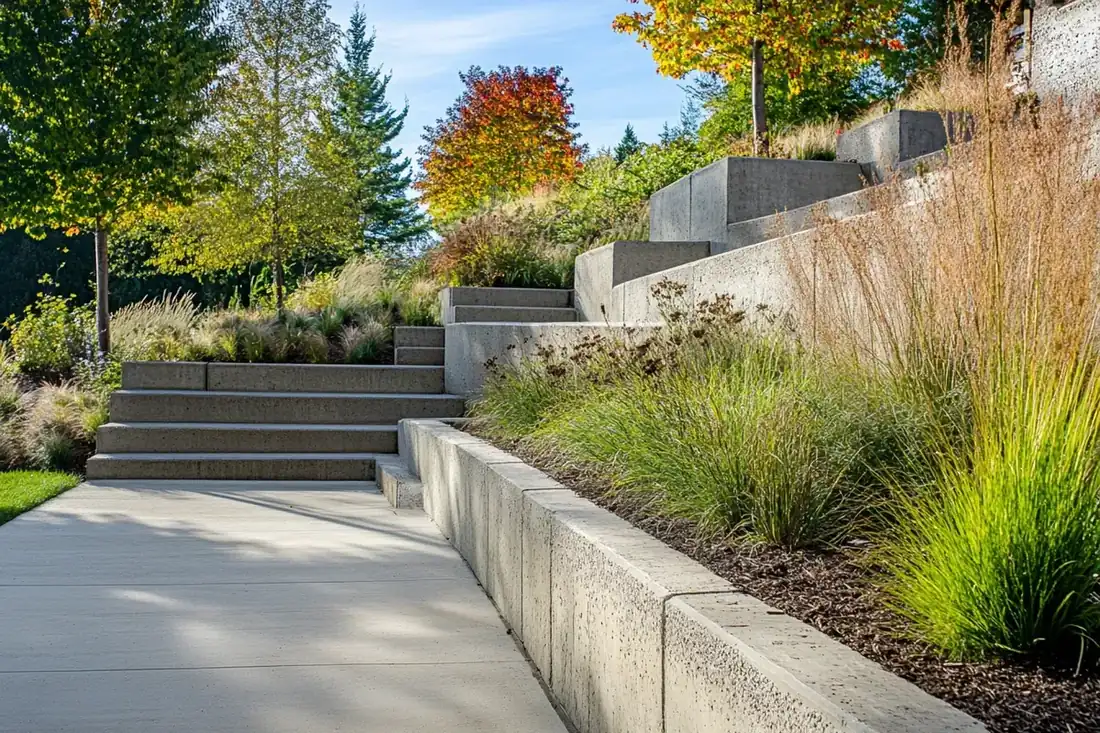
What the IRC says about expansive clay soil under building floors
Texas Local Government Code 214.212 makes the International Residential Code the residential building code in every Texas city. Each city then picks its own edition and amendments. The Colony, Plano, Frisco and Carrollton list the 2024 IRC, while Lewisville lists the 2021 IRC. Both editions word the expansive soil rules the same way.
Start with IRC R403.1.8. Foundations and floor slabs for buildings on expansive soil get designed under IBC Section 1808.6, with one exception: a slab-on-ground system that the building official accepts because it has performed well in similar soil. The code calls a soil expansive if its Plasticity Index is 15 or more (ASTM D4318, with fines criteria met) or its Expansion Index is above 20 (ASTM D4829). Section R401.4 adds that the building official can demand a soil test from an approved agency whenever soil data point to expansive, compressible or shifting ground.
R506.2 is new in the 2024 IRC. It says post-tensioned slab-on-ground floors on expansive or stable soils are designed to PTI DC10.5. The Colony's plan submittal checklist also asks for a geotechnical report and a stamped, engineered foundation letter on new construction and additions. That's why we send a new addition or a shop with walls to our concrete foundations page, where the price comes from the engineer's plan.
How Your Job Goes
Consultation and design
We walk the site and study the grade, the trees and where the water goes, then talk through thickness, steel and joints for your ground.
Planning and preparation
You get a free written estimate. We arrange permits, HOA approval and the Texas811 locate before digging, then strip, set the base and compact it.
Installation and completion
We set the steel on supports, pour, finish, cut joints and start curing. Then we hand the pad back with care notes for clay.
Fill, base course and steel: the layers under a slab on clay
For floor slabs, IRC R506 spells out the site prep. Clear the vegetation, topsoil and debris. Keep fill clean and compacted so support stays even, and cap fill at 24 inches of clean sand or gravel or 8 inches of earth unless it's approved. Under a below-grade slab, a 4-inch base course of clean graded sand, gravel, crushed stone or crushed concrete is the rule, with one exception: well-drained Group I sand-gravel soil. Blackland clay isn't Group I.
Rebar only works when it ends up inside the pour. Under R506, reinforcement has to be supported so it stays between the center and the upper third of the slab during the whole placement. Our crews put chairs or blocks under the bars. A bar left lying on the dirt gets stepped into the bottom of the pour, where it does no good.
For paved surfaces, The Colony's engineering rules go further. Its zoning code defines an all-weather parking surface as at least 5 inches of 3,000 psi concrete with #3 rebar on 18-inch centers both ways, laid over 6 inches of subgrade compacted to 95% standard proctor. The Engineering Design Manual sets commercial fire lanes and driveways at 6 inches of concrete over compacted subgrade where the Plasticity Index is under 15, or over 6 inches of flex base where it's 15 or higher.
Lime treatment of expansive clay soil under pavement has a catch. The Colony's manual reports that lime-induced heaving has failed pavement in North Texas. Soluble sulfates under 3,000 ppm aren't a big concern, 3,000 to 10,000 ppm calls for double lime treatment, and over 10,000 ppm rules lime out entirely.
Driveways, patios and walks: flatwork rules on moving ground
Flatwork isn't held to house-slab rules. The IRC floor section covers floors inside buildings, and its vapor retarder rule skips driveways, walks, patios, garages and carports. For flatwork, the spec comes from the city and from the dirt underneath.
Start with The Colony's residential packet. An on-lot driveway there is at least 4 inches thick, with #3 rebar at 24-inch centers and a tooled or sawed control joint. The design manual requires reinforcement in all driveways and walks and sets 4,000 psi concrete for sidewalks and approaches. Where a city sets weathering at Moderate, as The Colony does, IRC Table R402.2 calls for 3,000 psi air-entrained concrete (5 to 7 percent air) in porches, carport slabs and steps exposed to weather, and in garage floors. For layouts, see our concrete driveways, concrete patios and sidewalks and walkways pages.
On expansive clay soil a joint does more work, because a pad is going to crack somewhere and the joint decides where. NRMCA notes that exterior slabs tend to curl down at the edges when the sun heats the top. Thicker slabs curl less, and extra water in the mix raises drying shrinkage and curling. Pour a wet, soupy mix onto swelling ground and you get two problems at once. Stamped concrete needs the same joint plan, with cuts that hide in the pattern.
Walls carry side load. The Colony amends IRC R404.4 to require engineering, with a 1.5 safety factor against sliding and overturning, for any retaining wall that holds back more than 36 inches of unbalanced fill or stands over 24 inches tall under other lateral loads. You'll find more on our concrete retaining walls page.
Timing a pour around DFW heat, cold and rain
Summer highs at DFW Airport average near 96 degrees in July and August, and each of those months sees 7 to 10 days at 100 or more. NRMCA's hot-weather guidance says high air and concrete temperature, low humidity and wind all speed up moisture loss and can cause plastic shrinkage cracks. That's why summer pours start early and the curing crew follows right behind the finishers.
Winter is shorter, though it's no joke. DFW logs 10.6 days at or below freezing in January, and the February 2021 storm kept the airport at or below 32 degrees for 139 hours straight. NRMCA says to protect fresh concrete from freezing until it reaches 500 psi, which takes about two days after placement. The Colony skips a concrete inspection unless it's at least 38 degrees and rising, and it skips one when the inspector rules the site too wet.
Expansive clay soil adds a timing problem of its own. Subgrade worked right after a soaking May week is in its swollen state. The same patch, cracked open in late August, is in its shrunk state. On pour day we check the subgrade and add or remove water before the base goes down. We won't pour over open cracks or a mud bed.
Living with a pad on clay: water, roots and grade
Once the concrete is down, steady moisture along the edges is the part of expansive clay soil you can control. Keep this owner's list handy:
- Move the water away. Extend downspouts until roof water lands several feet out, and keep the grade sloping away from the pad.
- Water evenly in a drought. The Master Gardeners tie slab movement to drought drying, and a steady soak along a long edge is better than letting one side bake.
- Mind the trees. Roots draw water out of the ground and can damage a foundation. Find out how far a tree spreads before you set a new pad beside it.
- Seal the joints. The Colony requires sealant at the driveway construction joint and over the curb, and sealed joints slow water getting under any slab.
- Watch the lake lots. Land at and below the 537-foot contour around Lewisville Lake sits in a Corps of Engineers flowage easement, and work there needs written Corps permission.
Questions to ask any contractor about expansive clay soil
Two quotes for the same patio can land far apart when one covers the work under the pad and the other skips it. Have each contractor write down five things: the thickness, the base material and its depth, the bar size and spacing along with what holds it up, the joint spacing, and how they'll handle the subgrade if it's cracked dry or soaked. If the job is a building, ask whether the plan uses a soils report and who seals the foundation design.
Texas law adds a few protections worth knowing. Property Code 53.255 says the contractor must hand you a Know Your Rights and Responsibilities disclosure before a residential contract is signed. The Attorney General tells homeowners to get a written contract with start and finish dates and to hold back full payment until the work is done and inspected. In The Colony, any contractor pulling a permit for excavation or flatwork has to be registered with the city. On the permit side, our north Dallas suburbs permit guide lists each office, and our DFW driveway cost guide breaks down what moves a quote. Whatever you build on expansive clay soil, hire the contractor who answers all of these in writing before the pour.
Common Questions
How do I know if my yard has expansive clay soil?
Does a slab on expansive clay soil need a soil test?
What Plasticity Index makes soil expansive?
Why did my patio crack the first summer?
Is a post-tensioned slab required on expansive clay?
Can lime stabilization make clay worse?
Are lots by Lewisville Lake on different soil?
How thick should a slab be on clay?
Sources
- Houston Black Series, Official Soil Series Description (USDA-NRCS)
- Branyon Series, Official Soil Series Description (USDA-NRCS)
- Heiden and Ferris Series, Official Soil Series Descriptions (USDA-NRCS)
- Linear Extensibility Percent (definition, citing NRCS National Soil Survey Handbook) (UC Davis California Soil Resource Lab)
- Soil Data Access (SSURGO) (USDA-NRCS)
- 2024 International Residential Code, Chapter 4 Foundations (International Code Council)
- 2024 International Residential Code, Chapter 5 Floors (International Code Council)
- Engineering Design Manual and Checklists (City of The Colony)
- Foundation Plants for DFW Homes (Dallas County Master Gardener Association)
- CIP 19 - Curling of Concrete Slabs (National Ready Mixed Concrete Association)