
Where stamped concrete in The Colony earns its price on a lot
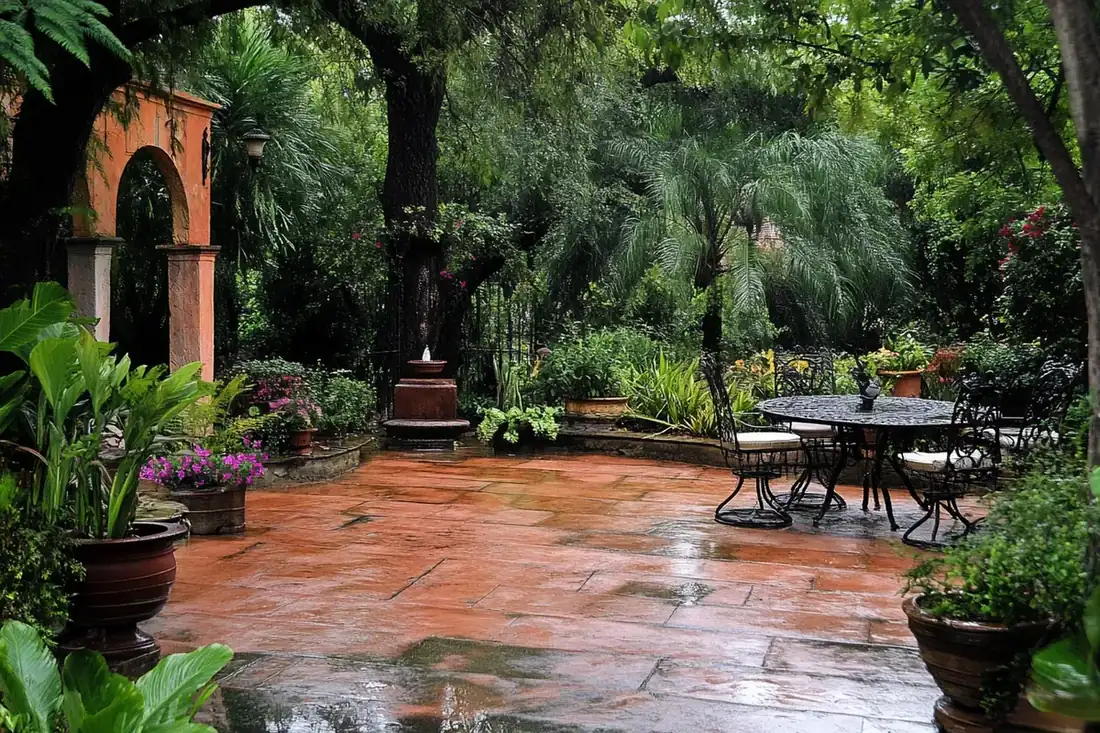
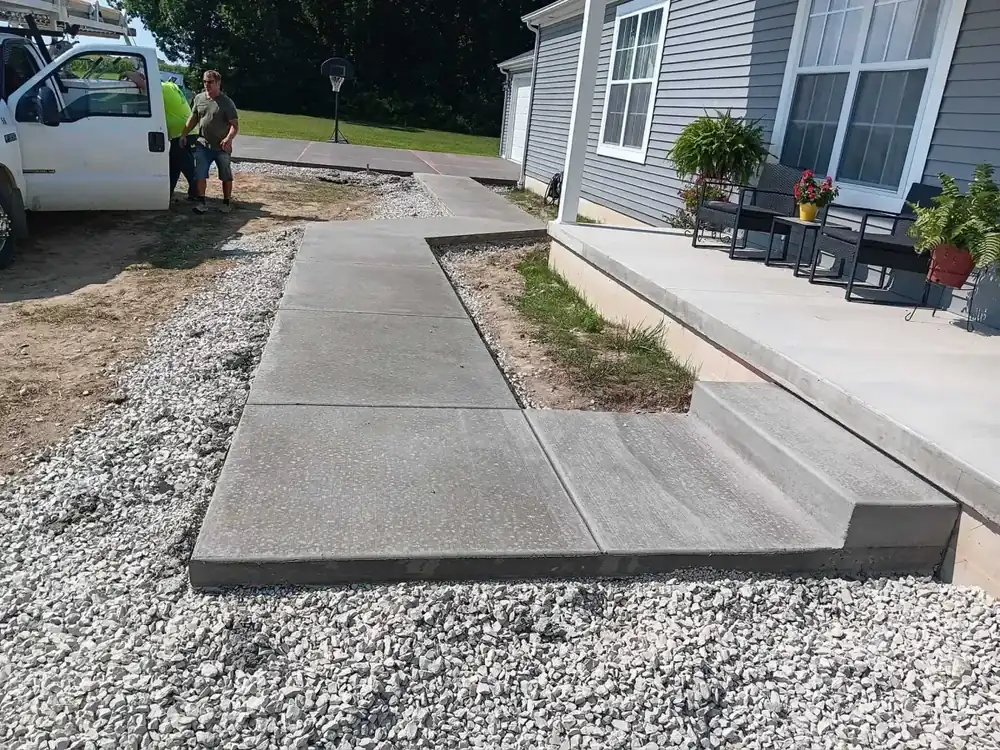
A stamp costs more than a broom finish, so spend it where eyes and feet land. Stone or slate texture earns the most on a backyard patio. At the front of the lot, a stamped walk, or a stamped border running beside a plain driveway, lifts the curb view for less than stamping the whole driveway. Our price for a full 2-car stamped driveway is $8,000 to $13,000.
At the street, the plan runs into a hard edge. The driveway approach in the right-of-way is built to the city's engineering spec in 4,000 psi concrete and has to match the engineered design. So we plan the pattern to start on your side of the approach. For broom-finish options and the slab spec behind them, see our concrete patio page and our driveway page, or ask for a free estimate with a photo of the area.
Patterns, color and release: how stamped concrete in The Colony gets its stone look
Stamped concrete is plain reinforced concrete that gets texture pressed into the surface while it's still plastic. Three decisions, made at the estimate, shape the look.
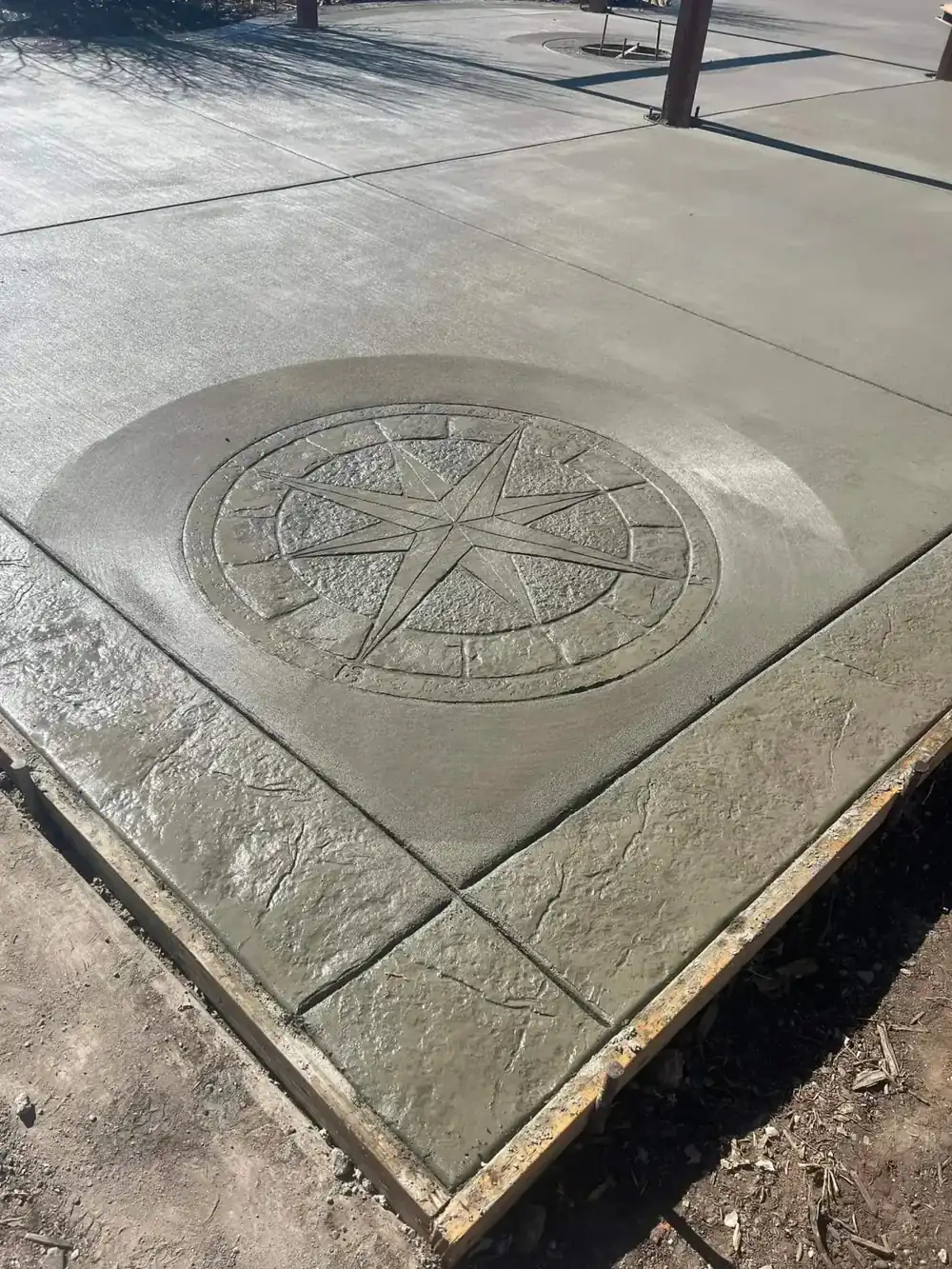
- Pattern. Mats press the joints and grain of ashlar slate, cobblestone, flagstone, brick or wood plank into the surface. Large-format patterns read calmer across a big patio, while small units fit a walk or border.
- Base color. Integral color goes in at the truck and runs through the whole slab. Color hardener is instead broadcast onto the fresh surface and gives a stronger surface color.
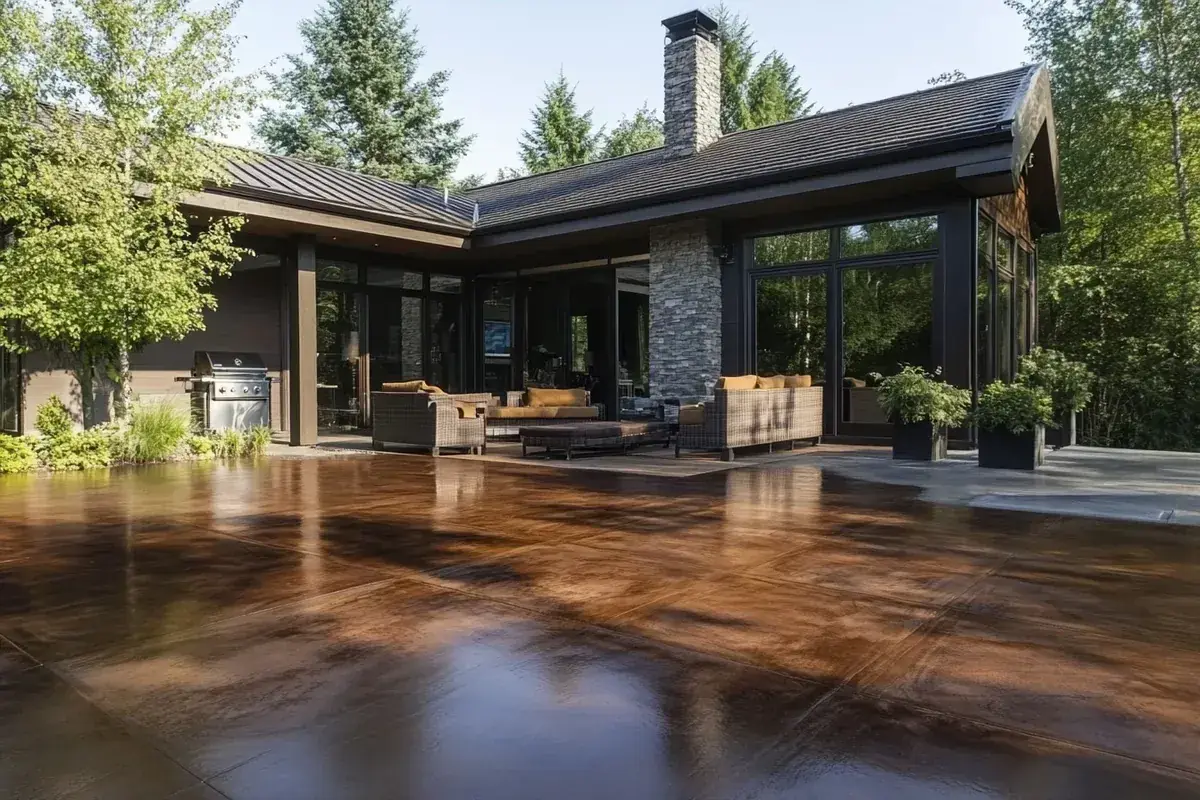
- Accent color. A release agent, powder or liquid, stops the mats from sticking and leaves darker tones in the low spots, which is what gives the stone its depth.
Judge colors from real samples in daylight, not on a screen, and show the sample to your HOA if it reviews exterior finishes. Two tones with a contrasting border frame a seating area, and you avoid paying for an elaborate pattern on every square foot. Sealer changes the final look too, deepening color and adding gloss, so we agree on matte or wet-look before the pour and the first coat brings no surprises.
What It Costs
These are our DFW ranges for stamped and colored concrete over a reinforced base. A free written estimate sets your number after the site visit.
| Job | Per sq ft | Typical project | What moves the price |
|---|---|---|---|
| Stamped and colored patio (300 to 400 sq ft) | $12 to $20 | $4,000 to $8,000 | Pattern, number of colors, borders, backyard access |
| Stamped 2-car driveway | $12 to $20 | $8,000 to $13,000 | Full stamp or border only, tear-out, approach work |
| Stamped walk or border | $12 to $20 | Priced on the estimate | Shape, steps, grit sealer |
| Plain broom-finish patio for comparison | $7 to $12 | $2,000 to $5,000 | Size and access |
Worked examples: an 18 by 20 stamped patio is 360 sq ft x $12 to $20 = $4,320 to $7,200. A 14 by 32 stamped terrace is 448 sq ft x $12 to $20 = $5,376 to $8,960. That same 360 sq ft patio in broom finish is 360 sq ft x $7 to $12 = $2,520 to $4,320, so the gap is what the stamp and color add. Once we've seen the site, a free written estimate makes the numbers firm.
What holds the pattern together: base, steel and joints for stamped concrete in The Colony
Texture is only the top layer. Underneath, a stamped slab needs the same base and steel as any structural flatwork, and in The Colony that means building for clay. NRCS soil data finds Branyon clay at 53 percent of the city's sampled points, with linear extensibility up to 13 percent, in the very high shrink-swell class. The Branyon series description records dry-season cracks 1 to 3 inches wide reaching 20 inches down.
On a plain gray slab a crack is a nuisance, but running through stamped slate it ruins the effect. So once sod and topsoil are stripped, we compact the subgrade, hold the reinforcing steel on supports inside the slab and cut control joints along the pattern's own grout lines, where they read as stone joints. The city also requires reinforcement in all driveways and walks, stamped or not, so the steel goes in whatever the finish.
Grade matters for a patio against the house. Water has to run off toward a yard drain or lawn, not toward the foundation or across the property line; the city's engineering checklist bars lot-to-lot drainage without an easement. The shared soil background is in our expansive clay guide.
Stamping concrete in The Colony against the clock in a North Texas summer
Stamping has a time window. Mats go down once the surface can hold an imprint and before it stiffens too far to take one, and heat narrows that window. NRMCA's hot weather bulletin explains that high air and concrete temperatures, low humidity and wind speed up moisture loss and cement hydration, and that fast surface evaporation can cause plastic shrinkage cracking.
DFW has plenty of it. NOAA's normals put DFW Airport at 20.3 days a year at 100 degrees or more, with about 7.4 in July and 9.7 in August. In that heat a stamped pour calls for more hands on the mats, smaller placement sections and an early start. It also means no extra water at the truck to buy time, since NRMCA's curling bulletin ties added mix water to more drying shrinkage and curling.
Cold and wet have limits of their own. Concrete inspections in The Colony don't happen unless it's at least 38 degrees and rising, and NRMCA advises keeping fresh concrete from freezing until it reaches 500 psi, about two days after placement. In February 2021 DFW Airport stayed at or below freezing for 139 straight hours, so a winter pour date always comes with a weather check.
How Your Job Goes
Consultation and design
We look at the area, show pattern and color samples and decide where the stamp starts and stops. The free written estimate that follows names the base spec and the sealer.
Planning and preparation
Where needed, HOA sign-off and the city permit come first, along with the utility locate. Then come demolition, subgrade compaction, forms, and steel on supports.
Installation and completion
We pour, color, release and stamp in small sections, cut control joints on the pattern lines, then wash the slab and seal it when it's ready.
Sealer, traction and sun on a stamped surface
Sealer is part of the stamped job, not an extra. It locks in the release color, deepens the base color and repels stains. It also smooths the surface, so a fair question follows: is stamped concrete slippery? A sealed, deeply textured slate pattern grips better than a smooth, glossy finish, and mixing a fine grit additive into the sealer coat adds traction on steps and walks.
Resealing is coming eventually. How soon depends on the sealer product, the sun and the foot traffic, so the estimate names the product and the maker's recoat guidance. For a quick check, sprinkle water on the busiest spot. Water that soaks in and darkens the concrete instead of beading means it's time.
Color and heat go together. At 106.2 days a year at 90 degrees or above at DFW Airport, a dark charcoal slate pattern on a west-facing patio soaks up plenty of sun. Lighter tans and grays treat bare feet better, and a two-tone layout can keep the darker accent on borders where nobody stands for long.
HOA color review and city permits for stamped concrete in The Colony
In the city's eyes, stamped concrete in The Colony is flatwork like any other. Any driveway or approach work needs a permit, as does most patio flatwork. The 2026 patio handout sets the patio threshold at 120 square feet and puts an HOA approval letter in the packet when the lot is in an HOA area. The details are in our permit guide.
Color and pattern are the HOA's call. Take the committee the pattern name, color samples, a dimensioned sketch and the lot survey. If an architectural committee in an association of more than 40 lots turns you down, Texas Property Code 209.00505 requires written notice of the reason and lets you request a board hearing within 30 days. Our HOA approval guide walks through the packet.
Building in another town? Every city runs its own desk. Frisco's Building Inspections Division permits private-lot concrete, Plano posts its 2024 code set on its Codes and Ordinances page, and Lewisville lists patio covers among its permitted work. Our Frisco, Plano and Lewisville pages cover each one.
Common Questions
How much more does stamped concrete in The Colony cost than a plain broom finish?
Is stamped concrete slippery when wet?
How often does stamped concrete need resealing in Texas sun?
Stamped concrete or pavers on North Texas clay?
Will my HOA have to approve stamped concrete in The Colony?
Can stamped concrete in The Colony run a driveway all the way to the street?
Does stamped concrete crack on The Colony's clay?
Sources
- CIP 12: Hot Weather Concreting (National Ready Mixed Concrete Association)
- CIP 27: Cold Weather Concreting (National Ready Mixed Concrete Association)
- Branyon Series, Official Soil Series Description (USDA-NRCS)
- Texas Property Code Ch. 209 (Sec. 209.00505) (Texas Legislature)
- Engineering Design Manual and Checklists (September 2023) (City of The Colony)
- Patio Deck and Patio Cover Requirements 2026 (City of The Colony)
- Residential Construction Information Packet (REV03/26) (City of The Colony)
- CIP 19: Curling of Concrete Slabs (National Ready Mixed Concrete Association)
- February 2021 Winter Event (National Weather Service Fort Worth/Dallas)